East Side Interceptor Sewer Rehabilitation
Project Overview
When King County discovered that a 3,700-foot-long, 96-inch reinforced concrete sewer pipe in Renton was severely corroded, the risk wasn’t just environmental, it threatened the infrastructure beneath a bustling commercial hub, including Boeing’s iconic 737 production facility. Carollo was brought in to solve a complex problem with precision, speed, and minimal disruption to the surrounding community and critical operations.
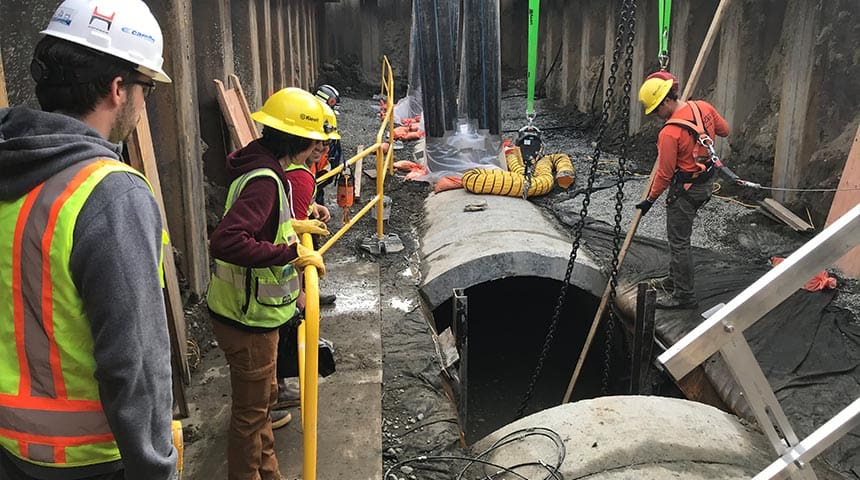
Traditional open-cut construction would have caused chaos for the streets, businesses, and traffic. Instead, Carollo used trenchless technology to restore the aging pipeline, keeping the surface calm while major surgery happened underground. To complete construction during the summer 2019 dry season, our team delivered both preliminary and final designs in just 14 months.
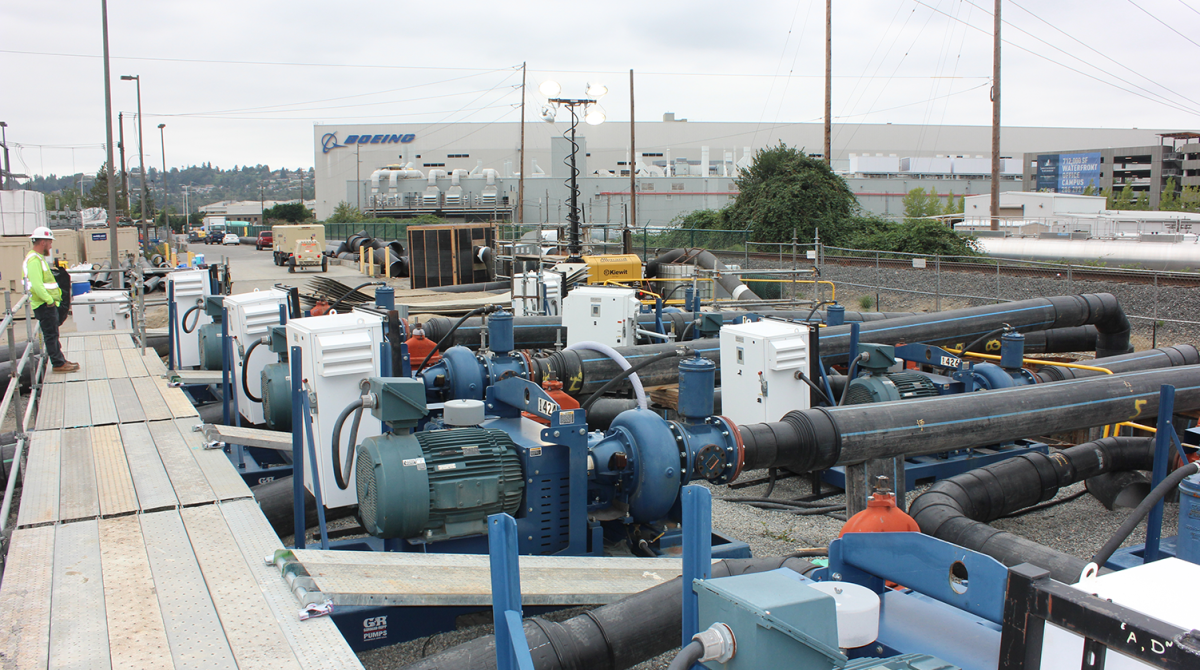
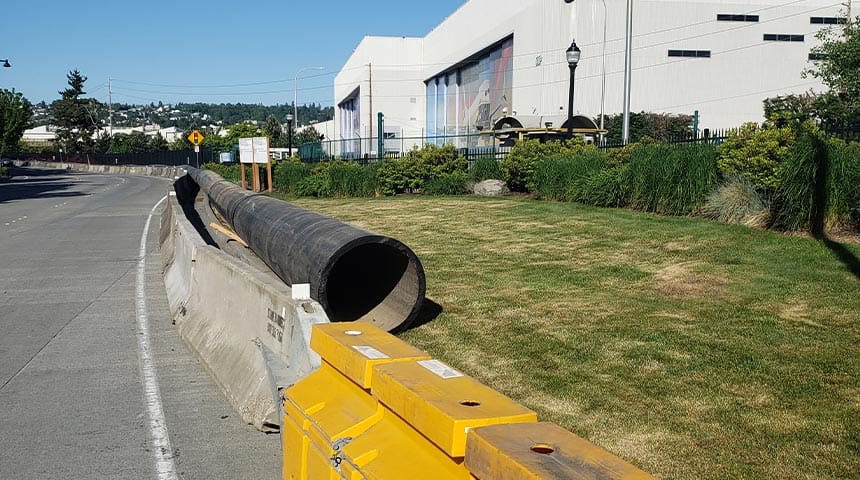
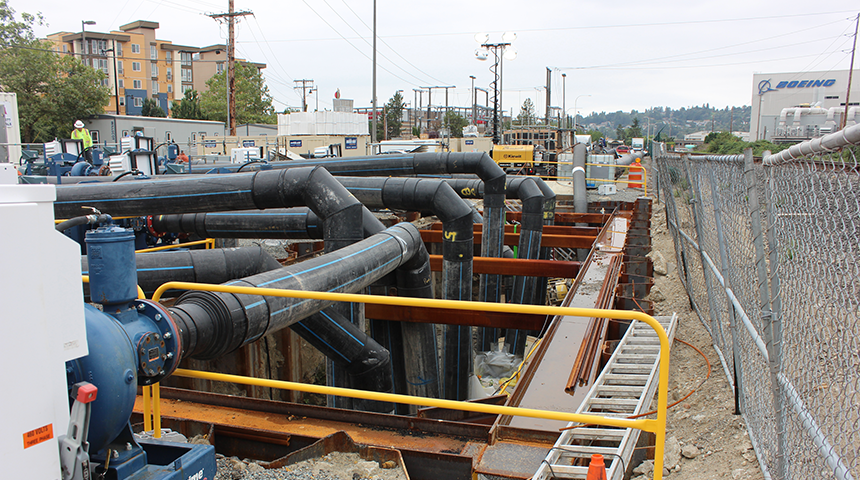
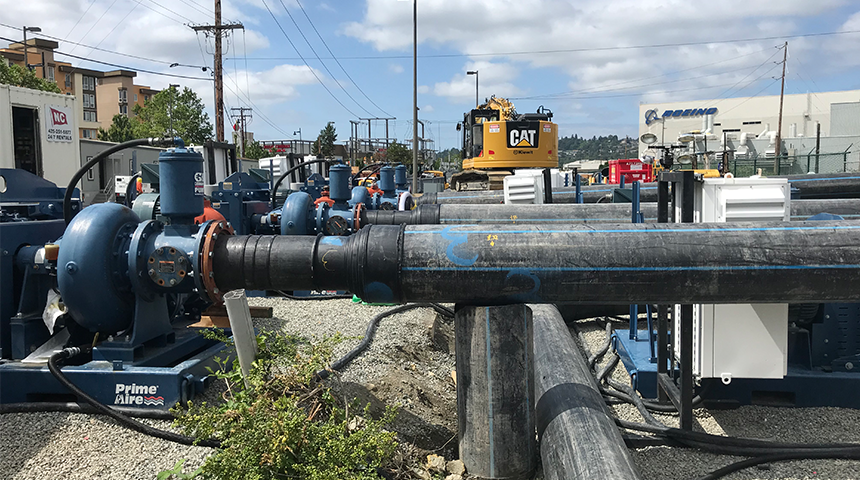
Rehabilitating a live, high-flow interceptor under pressure is no small feat. Carollo’s engineers developed a sophisticated Flow Bypass Plan to safely reroute up to 45 million gallons per day (mgd) of wastewater. The design allowed work to continue under normal flow conditions, with emergency protocols in place to immediately evacuate crews and equipment if flows spiked. The flow management strategy was coordinated across three treatment plants and two County operations groups, like conducting a symphony beneath the city.
Geotechnical investigations threw a curveball: the suction pit needed to be built in unstable, liquefiable soils right next to a busy BNSF railway line. Carollo engineered a custom shoring system using pressed-in steel supports to stabilize the ground and protect both the pipeline and the rail line above, avoiding costly delays and structural risk.
Above ground, community impacts were kept front and center. Carollo’s Construction Footprint Study evaluated the best suction pit location, mapped out alternate bypass routes, and identified utility conflicts through detailed potholing. We also led the development of traffic control strategies using detours, barriers, and message boards to keep the city moving while we worked below it.
We addressed community concerns about noise by specifying electric bypass pumps and setting strict sound limits during overnight work. The result was that a critical piece of infrastructure was brought back to life without derailing Renton’s daily rhythm.
Results and Highlights

Delivered expedited design in just 14 months to enable summer 2019 trenchless construction in a densely developed corridor serving Boeing’s 737 facility.
Designed a complex bypass system capable of rerouting up to 45 mgd while maintaining live flow operations and emergency response readiness.
Engineered shoring in liquefiable soils to protect critical infrastructure, including a nearby BNSF railway line and a pile-supported pipeline.