Various Improvements to Strengthen Resilience and Redundancy for Draper Water Treatment Plant Storage
Project Overview
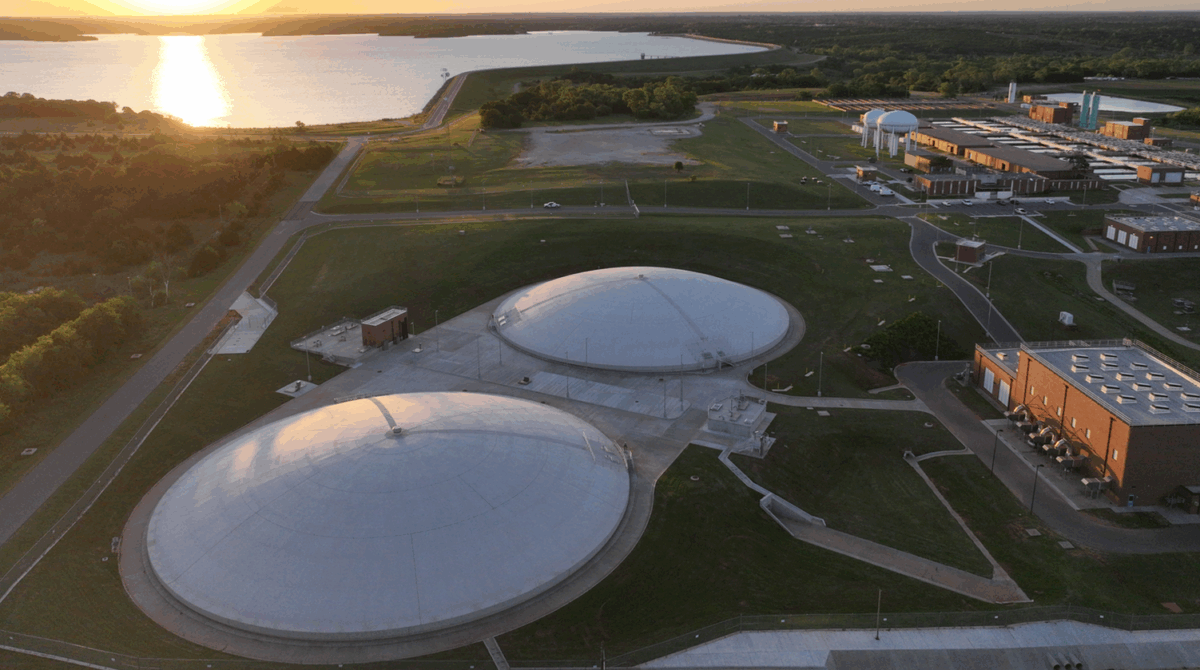
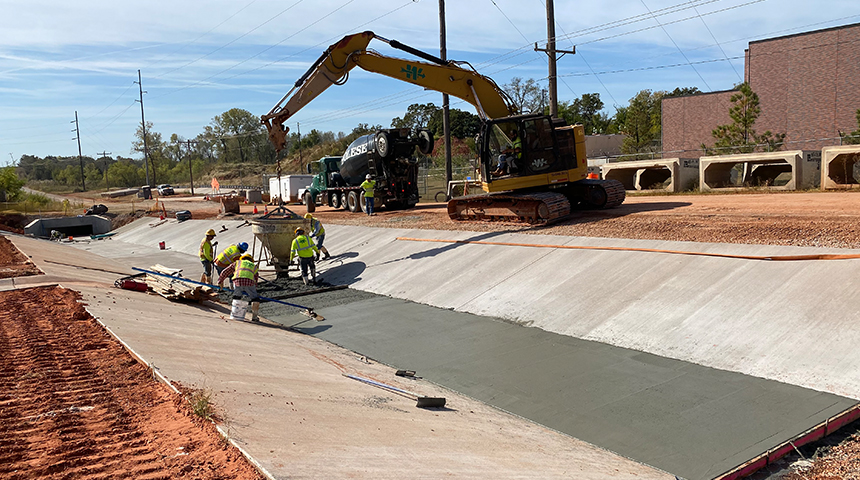
In 2014, increasing seismic activity in Oklahoma began to jeopardize the structural integrity of three existing 5-million-gallon cast-in-place concrete clearwells and their connecting flumes at the Draper Water Treatment Plant, which has a rated capacity of 150 mgd and serves as a critical component of Oklahoma City’s water supply system. Recognizing the long-term risk to essential infrastructure and water reliability, the City partnered with Carollo to develop a resilient and forward-thinking solution to address these vulnerabilities.
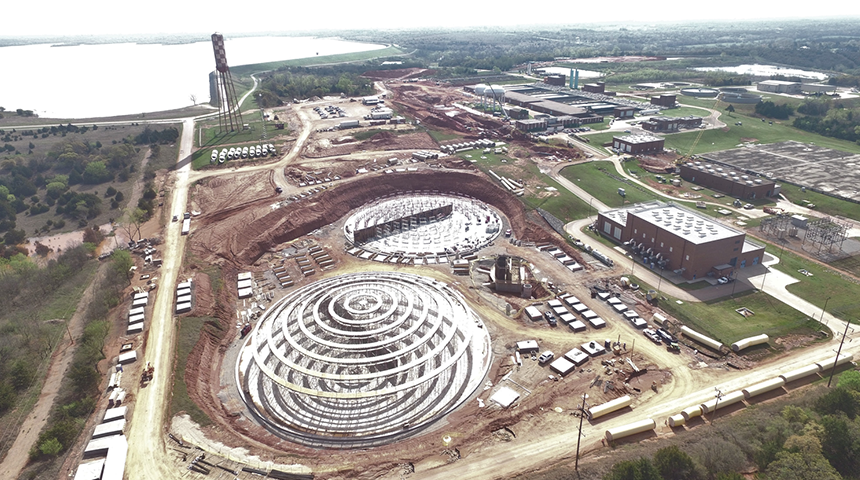
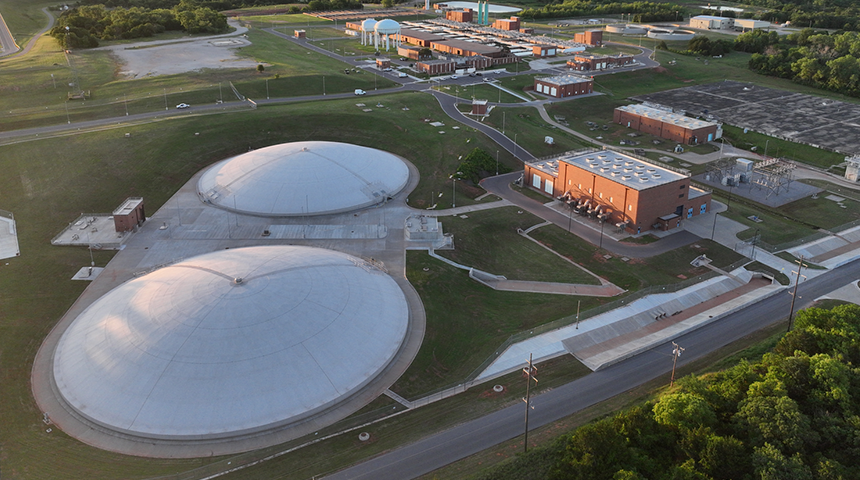
Carollo’s multi-phase program focuses on enhancing the resilience and redundancy of the water treatment plant’s clearwell system. As part of the initial planning and evaluation phase, Carollo conducted comprehensive lifecycle and cost comparisons between AWWA D100, Type III prestressed concrete clearwells, and traditional cast-in-place alternatives. A design charette helped streamline options by eliminating steel tank designs and flat-roofed concrete alternatives, prioritizing both seismic resilience and cost-effective construction.
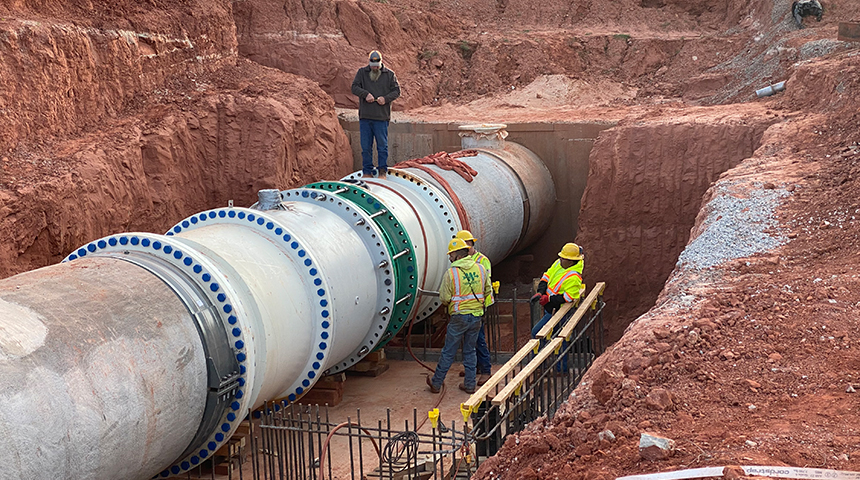
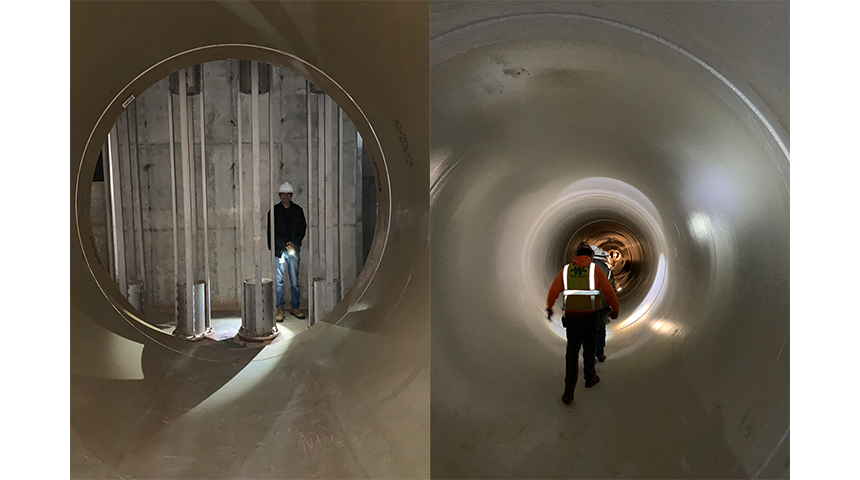
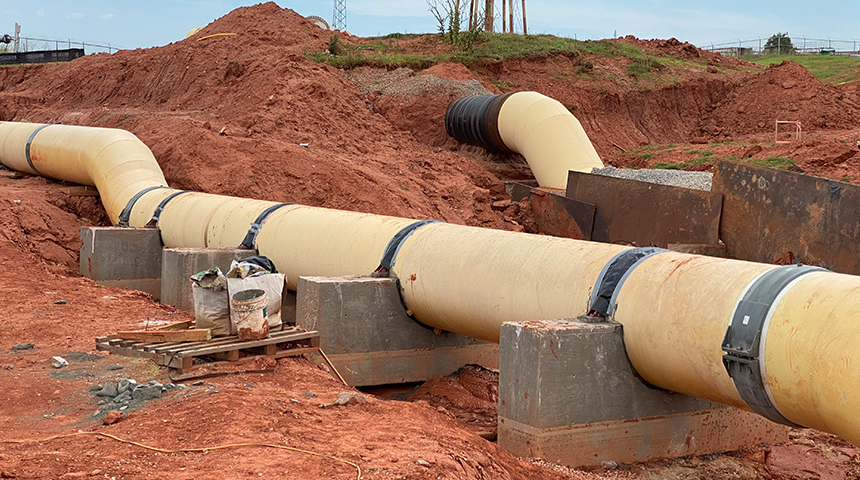
Key innovations included the addition of two 5-million-gallon circular, domed-roof clearwells, optimized through hydraulic modeling to reduce water age and improve storage efficiency. A 120-inch diameter filter effluent pipe was also designed to serve dual roles—as a disinfection contactor and a redundant connection between filtration and clearwell systems. Additionally, an 84-inch diameter suction pipe was installed to replace the existing flume connection to the high service pump station, with computational fluid dynamics modeling to provide optimal hydraulic performance.
This comprehensive program not only safeguards Oklahoma City’s water supply against seismic threats but also enhances operational flexibility and efficiency. The result is a more resilient system that protects public health, improves service continuity, and provides long-term value to the city and its residents.
Results and Highlights

Replaced aging flume with 84-inch suction pipe to boost hydraulic performance and reliability.
Used hydraulic and CFD modeling to optimize flow, reduce energy use, and improve water quality.
Phased improvements will add up to 25 million gallons of seismically resilient clearwell storage.