The importance of off-gas testing in determining wastewater treatment GHG emissions
Authors: Sam Reifsnyder, Michelle Young
Environmental Science and Engineering Magazine

Authors: Sam Reifsnyder, Michelle Young
Environmental Science and Engineering Magazine
Greenhouse gas (GHG) emissions are an unavoidable part of wastewater treatment, but where those emissions come from is becoming an increasingly important question for utilities. As water resource recovery facilities (WRRFs) pursue sustainability goals and adopt cleaner energy sources, attention is shifting from indirect emissions tied to electricity use toward direct, process-related emissions that occur within treatment systems themselves.
In a recent article published in Environmental Science and Engineering Magazine, Carollo’s Sam Reifsnyder and Michelle Young examine why off-gas testing is emerging as a critical tool for understanding and managing these emissions, particularly those released from aeration basins.
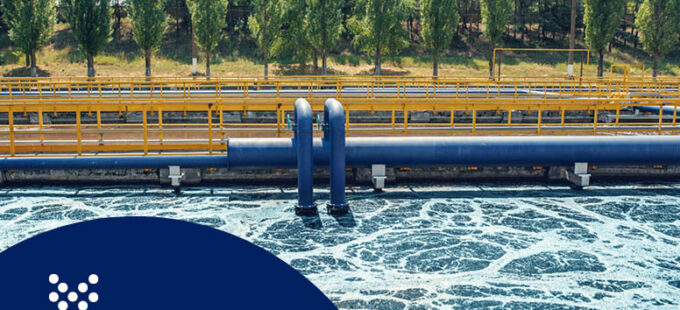
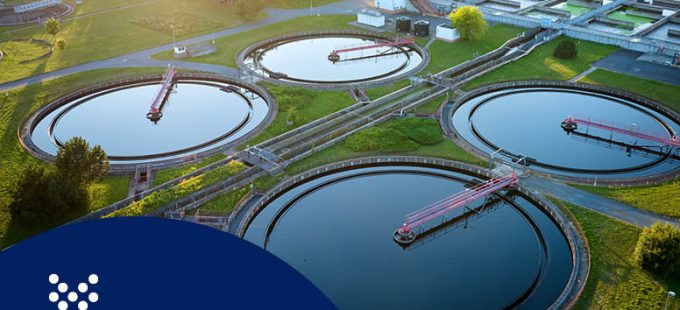
Aeration accounts for nearly half of a WRRF’s total energy use, making it a long-standing focus for efficiency improvements. But aeration basins are also a significant source of direct (Scope 1) emissions, including nitrous oxide (N2O), methane (CH4), and carbon dioxide (CO2).
N2O is especially impactful. As Sam and Michelle note, it is approximately 300 times more potent than CO2 and can represent a majority of a facility’s total carbon footprint. These emissions are closely tied to biological nutrient removal processes and can spike during changes in dissolved oxygen levels, carbon availability, or process configuration, conditions that are increasingly common as utilities implement advanced intensification strategies.
Off-gas testing has traditionally been used to evaluate aeration performance by measuring in situ oxygen transfer efficiency (OTE). Today, advances in portable gas sensors have expanded its role. Modern off-gas systems can continuously measure multiple gases, including N2O, CO2, and methane, providing real-time insight into both aeration performance and biological process behavior.
This evolution enables utilities to identify emission hotspots, benchmark their performance, and gain a deeper understanding of how operational changes impact emissions.
Historically, an off-gas testing campaign was considered labor-intensive and difficult to perform due to need to deploy heavy and bulky hood used to collect the off-gas. Sam and Michelle highlight how newer technologies are removing those barriers. Lightweight, inflatable hoods, such as Carollo’s Inflatable Fast and Lightweight Off-Gas Analysis Technology (I-FLOAT), paired with portable multi-gas analyzers allow testing to be conducted quickly and with minimal staff.
These systems are easy to transport, simple to deploy, and flexible enough to support testing across multiple aeration zones. This makes off-gas monitoring more accessible for utilities of all sizes, without the need for major infrastructure or staffing commitments.
As regulatory expectations evolve and utilities work to reduce both Scope 1 and Scope 2 emissions, off-gas testing is becoming a valuable, data-driven tool. By combining aeration performance metrics with direct GHG measurements, utilities can make more informed operational and planning decisions based on actual data.
Read the full article to learn how off-gas monitoring and tools like I-FLOAT help utilities better understand and manage their emissions.
Citations
Reifsnyder, Sam, and Michelle Young. “The Importance of Off-Gas Testing in Determining Wastewater Treatment GHG Emissions.” Environmental Science and Engineering Magazine, vol. 38, no. 6, Nov. 2025, pp. 18–19.