Melanie Pickett
Lead Engineer

Based on the recent fifth Unregulated Contaminant Monitoring Rule (UCMR5) results published in June 2025, 12.0% of public water systems nationwide have average PFOA and PFOS concentrations in drinking water exceeding the proposed maximum contaminant levels. Many of these water systems will need to install PFAS treatment processes to meet upcoming compliance requirements.
Alternative evaluation is a paramount initial step to PFAS treatment implementation. Alternative evaluation methodologies fall into three main categories: desktop evaluation, bench-scale testing, and piloting. Each evaluation method has its advantages and drawbacks.
Desktop evaluation involves literature review, analysis of operation and performance data from similar applications, and sometimes numerical modeling. Obtaining adequate, well-documented data for similar applications with comparable PFAS occurrence levels, background water quality, and system design criteria is challenging, thus rendering results the least accurate among all evaluation methods.
Numerical modeling utilizing pore surface diffusion models to predict PFAS adsorption performance leverages site-specific water quality information while requiring no testing. Although attractive, its utility is limited due to uncertainty and constraints of a numerical model to accurately reflect underlying adsorption mechanisms and site attributes at the same time.
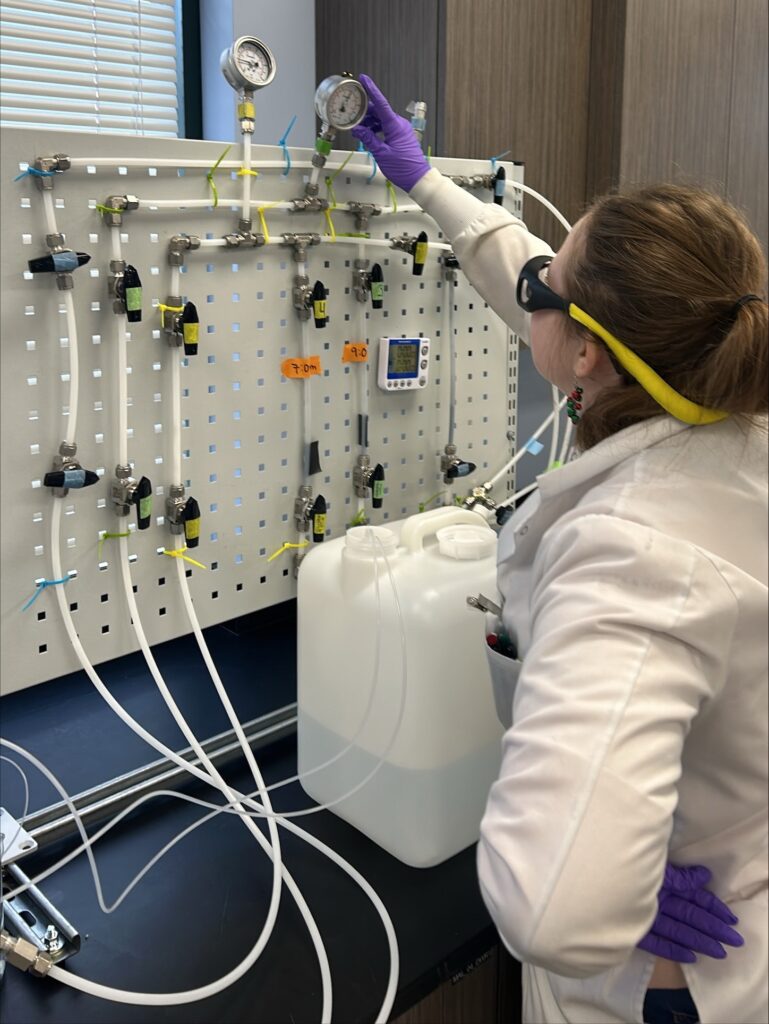
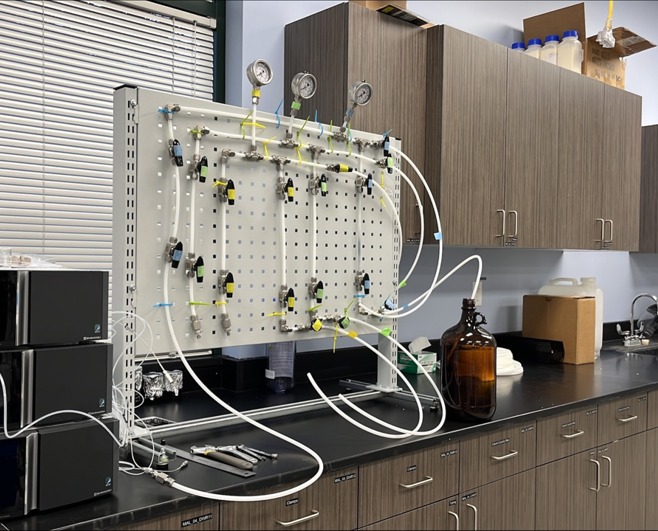
Bench-scale testing involves raw or process water collection and subsequent laboratory testing. Rapid small-scale column testing (RSSCT) compares adsorptive media performance for PFAS, including granular activated carbon (GAC), anion exchange resin (IX), and novel adsorbents. By grinding media into smaller particles, RSSCTs assess PFAS breakthrough behavior in 1-10% of the time and cost required for pilot studies.
RSSCTs are commonly used to expedite technology selection, media product selection, determination of critical design criteria, and enable more accurate life-cycle cost estimates. However, scalability of bench-scale results to pilot- or full-scale performance remains a knowledge gap. Other limitations include using batch feed water samples, potentially yielding unrepresentative results without capturing long-term water quality variations. Operational challenges like particle and biological fouling potentials, headloss accumulation, and media abrasion aren’t simulated in RSSCTs due to short operation time.
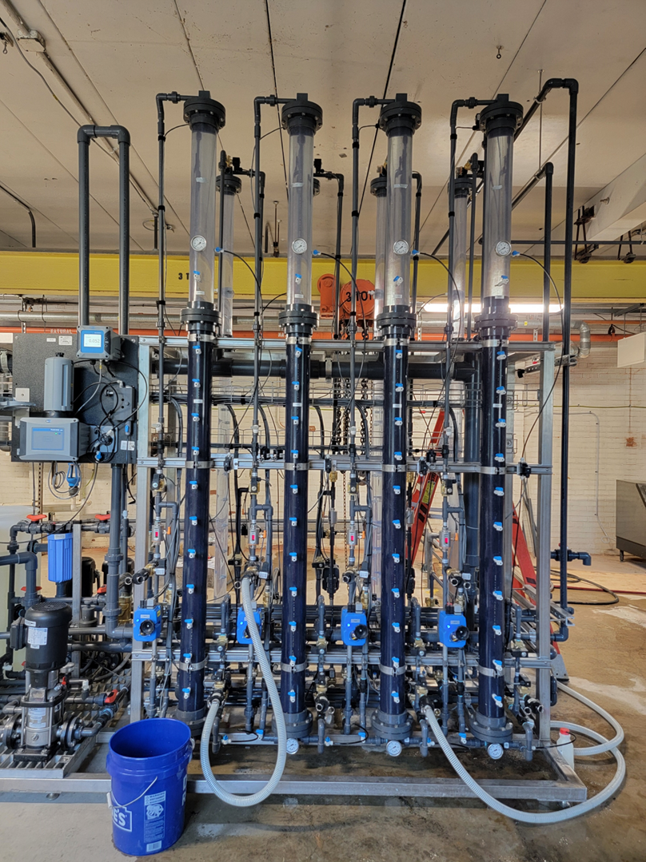
Pilot columns using the same media products and feed water as full-scale systems are the most accurate and reliable predictors of PFAS treatment performance. However, low PFAS concentrations and high media adsorption capacity can extend pilot evaluation from months to years before full PFAS breakthrough could be characterized.
Piloting provides multiple benefits and is essential for emerging treatment technologies. It’s important when considering technologies with limited precedented demonstrations, highly variable water quality or treatment flows, or water quality outside typical application boundaries. Piloting is also crucial when system design criteria exceed recommended ranges, particle or biological fouling potentials are high, or state primacy agencies require it for full-scale facility permitting. Additionally, piloting identifies pretreatment needs for effective downstream PFAS treatment, particularly for surface water supplies with higher Total Organic Carbon and/or turbidity levels.
The right evaluation method depends on various factors: technology maturity, source type, PFAS levels, water quality, treatment goals, design criteria, schedule constraints, and permitting requirements. Effective use of any evaluation approach requires expert assistance with evaluation system design, equipment selection, and data interpretation.