PFAS Assessment and Treatment Technologies
Drawing from decades of experience testing and designing technologies that have been demonstrated to remove PFAS from drinking water, Carollo is helping water utilities quickly implement treatment solutions to remove these contaminants from their source waters. We are leaders in planning, evaluating, and designing water projects using innovative technologies to treat for a wide range of chemical contaminants, including PFOS, PFOA, CECs, PPCPs, industrial chemicals, and others.

Plan to be prepared
From federal regulations to practical guidance, understanding PFAS requires staying current with both science and policy. Explore these resources to learn more about risks, regulations, and management strategies.




Innovation in conventional PFAS treatment
The detection of PFAS in water supplies is of significant concern for impacted water systems due to potential adverse health effects at low nanogram-per-liter (ng/L) concentrations and the limited removal achieved through conventional treatment processes. There are additional concerns about the unknowns of PFAS, such as the identification of the PFAS compounds that are present, which compounds pose the most significant health effects, and thus, how to prioritize remediation and treatment efforts. Carollo has broad expertise in PFAS planning, pilot studies, and evaluation of advanced treatment technologies.
Our experience includes the following:
- Using rapid small-scale column tests (RSSCT) to support the design of pilot- and full-scale GAC and IX for PFAS treatment systems.
- Leveraging Blue Plan-it®, a decision support tool, to develop and optimize treatment strategies (including RO, GAC, and IX) for PFAS treatment projects.
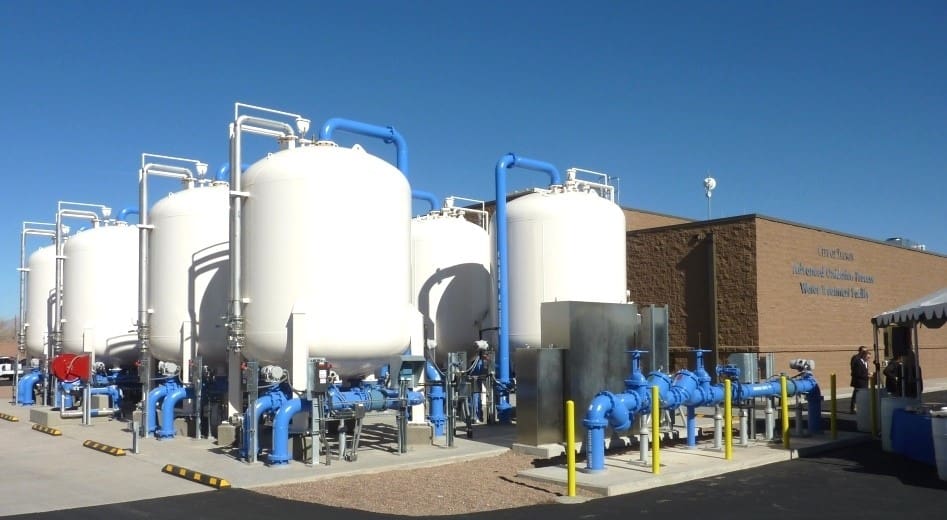
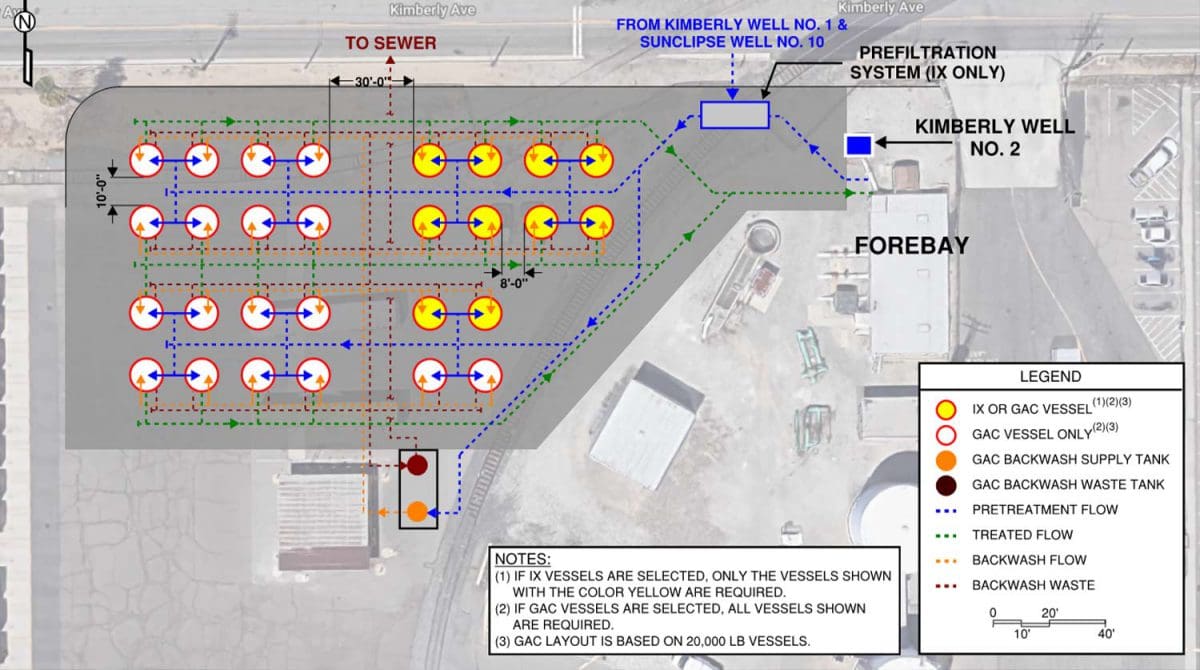
- Working with utilities to study potential treatment options and develop strategies to centrally treat and remove PFAS from groundwater wells.
- Designing GAC media and IX resin full-scale treatment facilities based on water quality and RSSCT results.
- Providing engineering support services for planning and evaluating potential impacts of PFAS on potable wells, including blending, well-head, and centralized treatment options.
In the past five years, Carollo has engaged in more than a dozen PFAS-related research, pilot, and full-scale treatment projects. This work includes extensive modeling and model calibration, 40+ RSSCTs and column studies, conceptual designs, cost estimates, and four full-scale designs.
Related Projects


PFAS Treatment Technologies
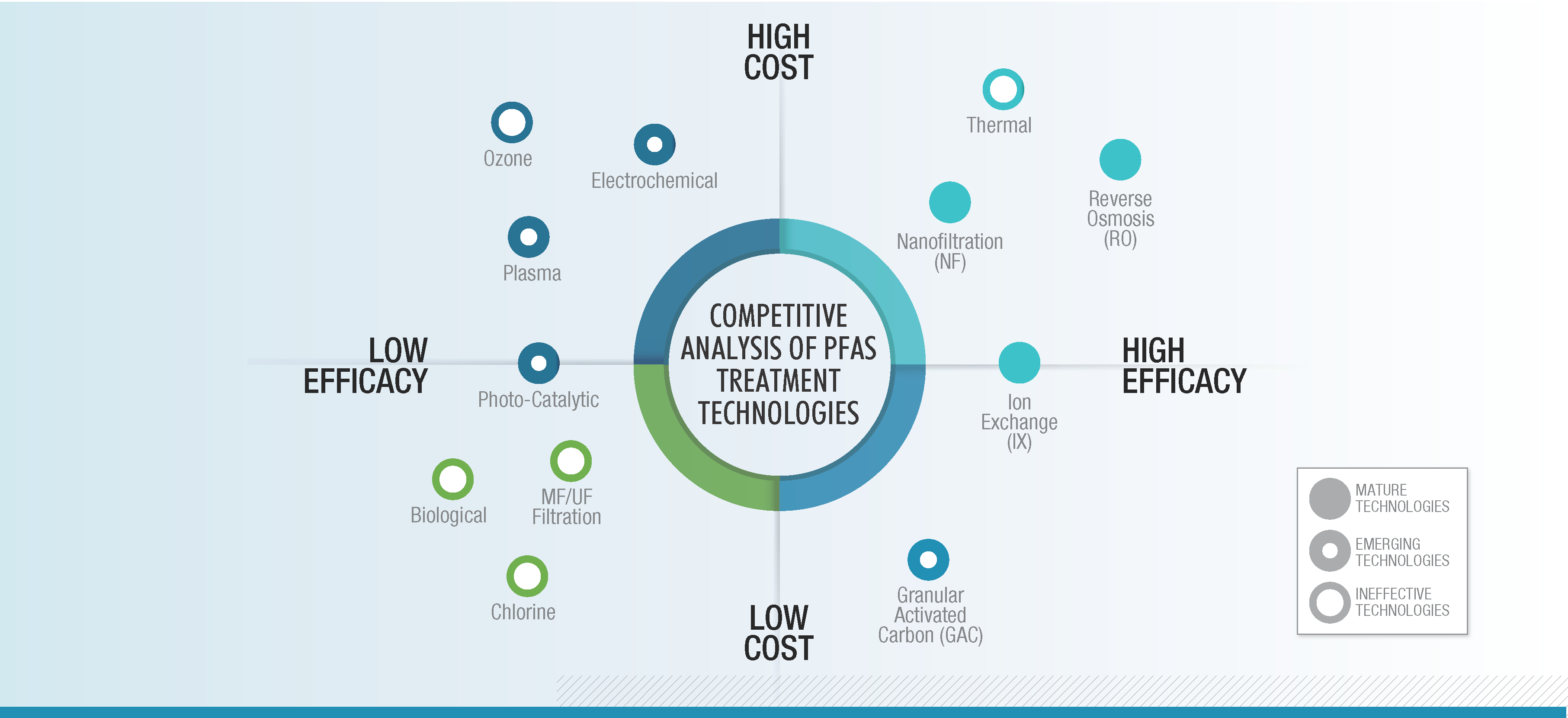
PFAS are challenging chemicals to remove from water since they are not removed with most conventional treatment technologies. Through close collaboration with our clients and research partners, Carollo is advancing promising tools and solutions for PFAS treatment. Our efforts focus on two distinct areas: participating in fundamental research on PFAS destruction for future applications and optimizing currently available and proven drinking water technologies for cost- and energy-efficient PFAS removal.
Tools to Optimize Design of GAC and IX for PFOA and PFOS Treatment
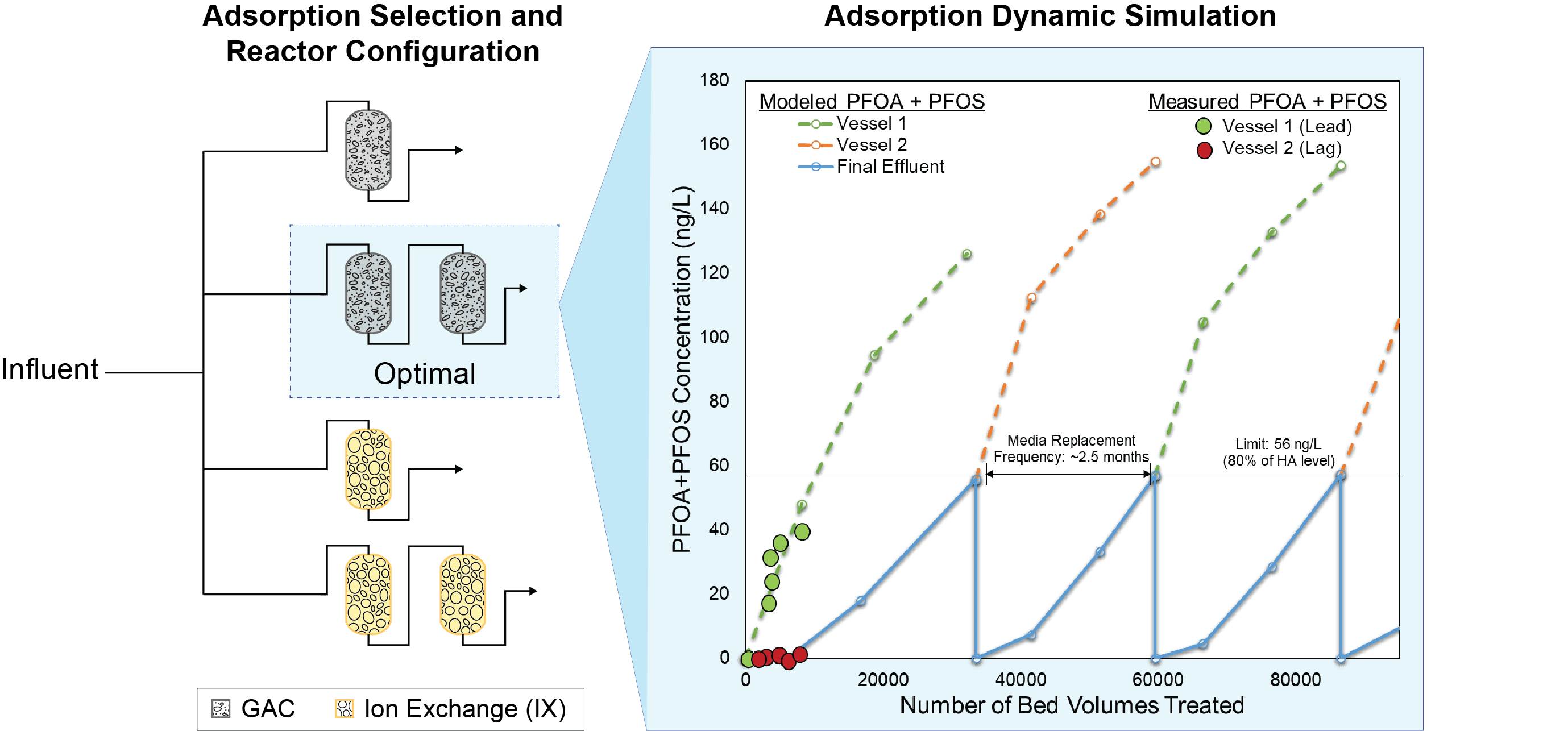
Carollo’s experience designing full-scale treatment systems is bolstered by previous and ongoing research. In partnership with Arizona State University (ASU), Carollo has conducted over 40 sets of RSSCTs, evaluating PFAS removal through six different carbons and two IX resins. Carollo integrated the results into the Blue Plan-it® tool to evaluate and optimize the number of contactors and the configuration to meet a target treated water quality goal. To test IX at bench-scale, Carollo worked with ASU to develop a modified RSSCT method and has been validating the results using pilot- and full-scale test data.
Evaluating Innovative Technologies to Treat PFAS Residuals
While RO is the best demonstrated technology to remove PFOA and PFOS and some shorter-chain compounds, the dilemma of how to dispose of PFAS-laden concentrate can be a major hurdle to implementing it. Carollo is working with Colorado School of Mines to pilot-test an innovative UV-bisulfite treatment process to degrade PFAS from nanofiltration concentrate.