
Caroline Russell
Chief Technologist

December 9, 2025



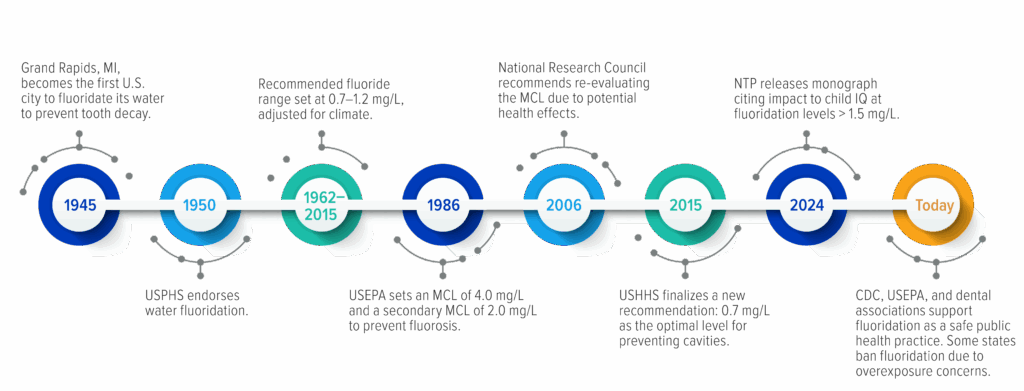
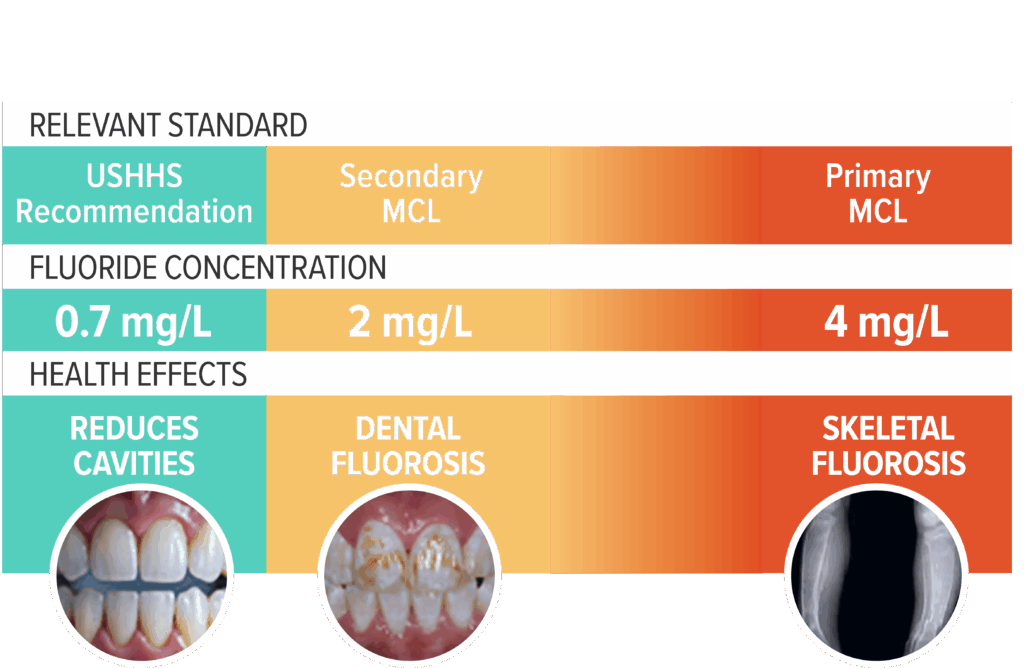
Drinking water fluoridation in the United States has been a landmark public health practice for decades. First recommended in 1962 by the US Public Health Service (USPHS), fluoridation helps prevent dental cavities by maintaining optimal fluoride levels in public water systems. Initially set at 0.7–1.2 mg/L, the USPHS updated this recommendation in 2025 to a uniform 0.7 mg/L, reflecting increased fluoride exposure from toothpaste, food, and other sources—and concerns about dental fluorosis and overexposure.
Fluoride itself is a naturally occurring mineral found in soil and groundwater. Its concentrations vary widely—below 0.1 mg/L in some US regions and above 4.0 mg/L in others. In the 1940s, studies first linked naturally fluoridated water to lower cavity rates, leading to fluoride’s addition to toothpaste by the 1950s and the launch of widespread water fluoridation programs across the US and elsewhere.
Today, new research has ignited debate. A 2006 National Research Council report raised questions about fluoride’s health effects, and the 2024 National Toxicology Program (NTP) report has drawn further attention to potential neurodevelopmental impacts in children. Understanding fluoride’s effects is challenging due to overlapping exposures.
Regulations and guidelines for water fluoridation vary by state. Some state laws mandate fluoridation while others defer to local communities. Meanwhile, some states are moving independently. California courts have mandated safety reviews for additives, and both Utah and Florida have enacted bans, citing overexposure risks and ethical concerns about medicating public water supplies.
At an April 7, 2025 joint event, the US Health and Human Services (USHHS) secretary and the US Environmental Protection Agency (USEPA) administrator announced plans to review scientific information related to the fluoridation of drinking water. These reviews could result in revised Centers for Disease Control and Prevention (CDC) guidelines or new regulations on fluoride in drinking water.
The future of water fluoridation continues to be shaped by both health policy and public values. Opponents argue that fluoridation is no longer necessary in an era of widespread dental care. Supporters, including the CDC and the American Dental Association, have emphasized its role in reducing socioeconomic disparities in dental care access in some communities and its high return on investment—estimated to save approximately $20 for every $1 spent.
Customers may reach out to their water utility for clarity on recent media coverage related to fluoridation. Understanding local regulations and being prepared to answer questions from the media and the public—or proactively educating them on the subject with accurate information—can go a long way in alleviating concerns and improving the outcome of future interactions.
Carollo has been helping water systems develop consistent messaging, train utility staff, craft sampling plans, and design treatment strategies to lower fluoride concentrations. Reach out to learn more.